
Malden Wood Flooring repairs hardwood floor water damage in Malden, MA and nearby, serving surrounding cities including Everett, Melrose, Chelsea, Medford and Somerville. In more than 20 years of this work we have learned that the worst water-damage repairs are the fast ones: boards sanded or replaced before anyone knew where the water came from or whether the floor had dried.
So we slow the first part down. We trace the water to its source, take moisture readings of the boards and subfloor, and follow those readings until they settle. Only then do we decide what can be saved with a sanding, what needs replacing, and how much of the floor needs refinishing so the repair disappears.
We also write it down. Every water job gets a room-by-room record with photos, readings and a written scope, which goes to you and your adjuster before anything is torn out.
Where the Water Came From
Leaks From the Unit Upstairs
In two-families and condo buildings, water often comes from the unit above: a washing machine hose, a toilet supply line, a tub overflow or a failed shower pan. The water runs along joists and can show up rooms away from its source. We look at the ceiling stains, the direction of the cupping and the readings to trace where it entered before touching any boards.
That trace matters for more than the repair. When two owners, an association and possibly two insurers are involved, a clear account of where the water entered is the first thing everyone asks for.
Radiators, Pipes and Appliances
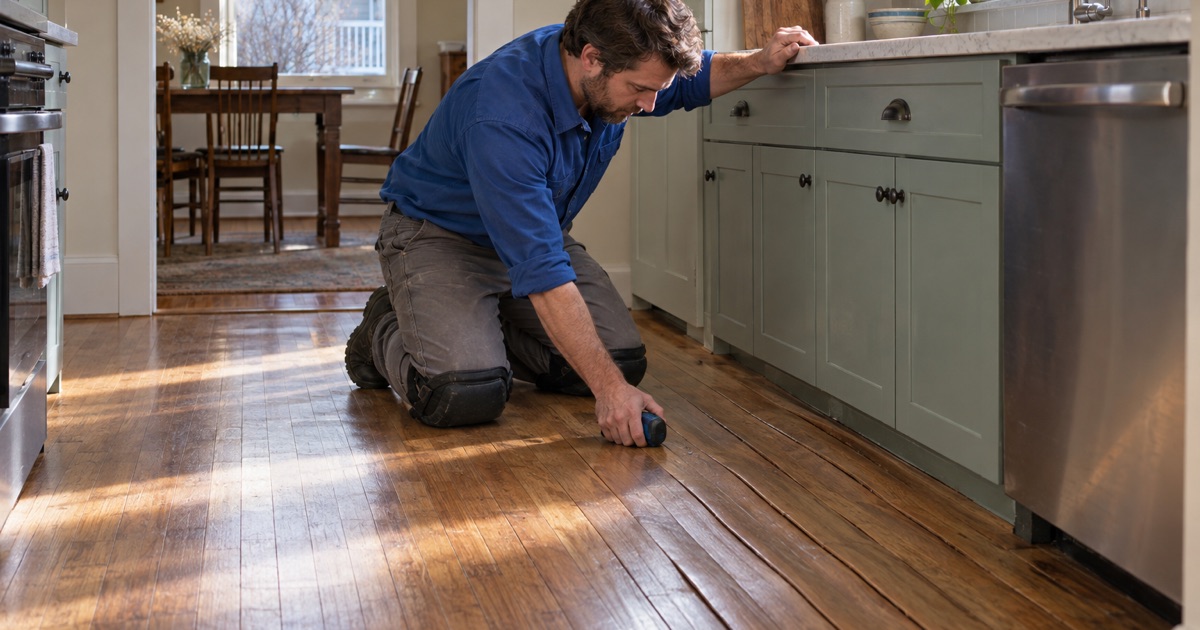
A weeping steam radiator valve or a hot water pipe joint can leak slowly for months. The floor under it darkens, softens and may start to rot before anyone notices. Refrigerator ice-maker lines, dishwashers and sink cabinets do the same in kitchens. We find the wet zone with a moisture meter, which often reaches further than the visible stain.
In older houses, the old radiator spot is worth checking even after the radiator is gone. Years of drips under a valve can leave soft subfloor and darkened boards that only show up once the floor is sanded, so we probe those areas before quoting a refinish.
Flooded Lower Levels
Basements and lower levels flood from groundwater, a failed sump pump, a backed-up drain or surface water. Floors there often have concrete slabs underneath, which hold water much longer than wood subfloors. Solid hardwood below grade rarely survives a real flood; engineered flooring sometimes can if it was installed with the right vapor retarder and dried quickly.
Closer to the coast and along rivers, lower levels can take water from outside during storms. We do not guess at flood zones for any address; we measure what the water did to the floor and help you decide whether wood belongs in that space at all.
Drying and Reading the Floor
Moisture Readings Over Time
We take readings in the damaged area and compare them with dry boards elsewhere in the house. That comparison, not a single number, tells us when the wet section is back to normal. We repeat the readings as the floor dries, and we write them down so the timeline is on record.
Why Cupped Floors Are Not Sanded Right Away
Cupping happens when the bottom of the board is wetter than the top, so the edges rise. As the floor dries, the cup often relaxes. Sanding it flat too early removes wood from the raised edges, and when the boards finish drying, the middles end up higher: a crowned floor that has lost wood it cannot get back.
Drying Equipment and Access
Drying may involve fans, dehumidifiers and sometimes specialized mats or panels, often run by a restoration company. Where the water has reached the subfloor, removing a few boards helps air get underneath. We coordinate with whoever is running the drying equipment so the floor decision waits for the right readings.
Save, Sand or Replace
Boards That Can Be Saved
Boards that return to normal moisture and lie reasonably flat can usually be sanded and refinished. Light water marks near the surface often come out in the sanding. We refinish the whole room, or up to a natural break, so the repaired area does not stand out from the rest.
Boards That Need Replacing
Buckled boards, deep black stains, rot, delaminated engineered boards and anything that stays wet after the source is fixed need to come out. We cut them out cleanly, repair or replace the subfloor, and weave in matching boards so the replacement follows the original pattern.
In older houses the replacement boards have to match oak or pine that is no longer standard in width or thickness. We source matching or reclaimed stock and test stain so the new boards blend in once refinished.
When Replacing the Whole Floor Makes Sense
Sometimes the damage is widespread, the floor was already thin from past sanding, or the product is discontinued. In those cases replacing the whole room can be cheaper and look better than patching. We lay out both options in writing with the reasons, so you and your adjuster can compare them.
Insurance, Condos and Documentation
Room-by-Room Records for the Adjuster
For every water job we document each room: photos, moisture readings, where the damage stops, and which boards can be dried and saved versus replaced. That record answers the questions an adjuster asks and saves you from trying to reconstruct the damage after the old boards are gone.
Condo Units and Shared Buildings
In a condominium, who repairs and who pays depends on the association’s master deed, bylaws and insurance, and on where the water came from. Massachusetts condominium law, M.G.L. c.183A, leaves many of those details to each association’s own documents. We keep our record to the facts in your unit so it serves every party.
Flood Policies and Lower-Level Floors
Flood coverage is separate from homeowners coverage, and a standard NFIP flood policy generally excludes finished flooring in a basement. Before rebuilding a flooded lower level with wood, check your own policy with your agent and weigh a floor that tolerates water better.
Our Step-by-Step Water Damage Repair Process
Step 1: Trace the Source
We inspect the floor and the ceiling or rooms around it to find where the water came from and confirm it has stopped.
Step 2: Measure and Document
We take moisture readings, photograph each room and record where damage begins and ends.
Step 3: Dry and Monitor
The floor dries with the right equipment while we track readings until they match the dry areas of the house.
Step 4: Repair or Replace
Boards that recover are kept; boards that do not are cut out, the subfloor repaired, and matching boards woven in.
Step 5: Sand and Refinish
The repaired area is sanded and finished with the surrounding floor so the repair blends in.
- 20+ Years on Wood Floors
- Free Written Estimates
- Stairs Priced Per Tread