
Malden Wood Flooring refinishes and rebuilds hardwood stairs in Malden, MA and in surrounding cities including Everett, Melrose, Chelsea, Medford and Somerville. Our 20+ years of stair work cover worn oak treads in front halls, painted back stairs in two-families, and carpeted flights turned into wood.
Stairs are their own trade within flooring. A drum sander cannot reach them, the nosing and corners are shaped by hand, and a stair that is used every day has to stay usable while the work goes on. That is why we quote them by the tread and riser, never as an afterthought folded into the floor’s square footage.
Many of the stairs we see are in older houses, where treads may be thin from past sanding, risers are painted, and paint layers may contain lead. We check all of that before any sanding begins.
Refinishing Hardwood Stair Treads
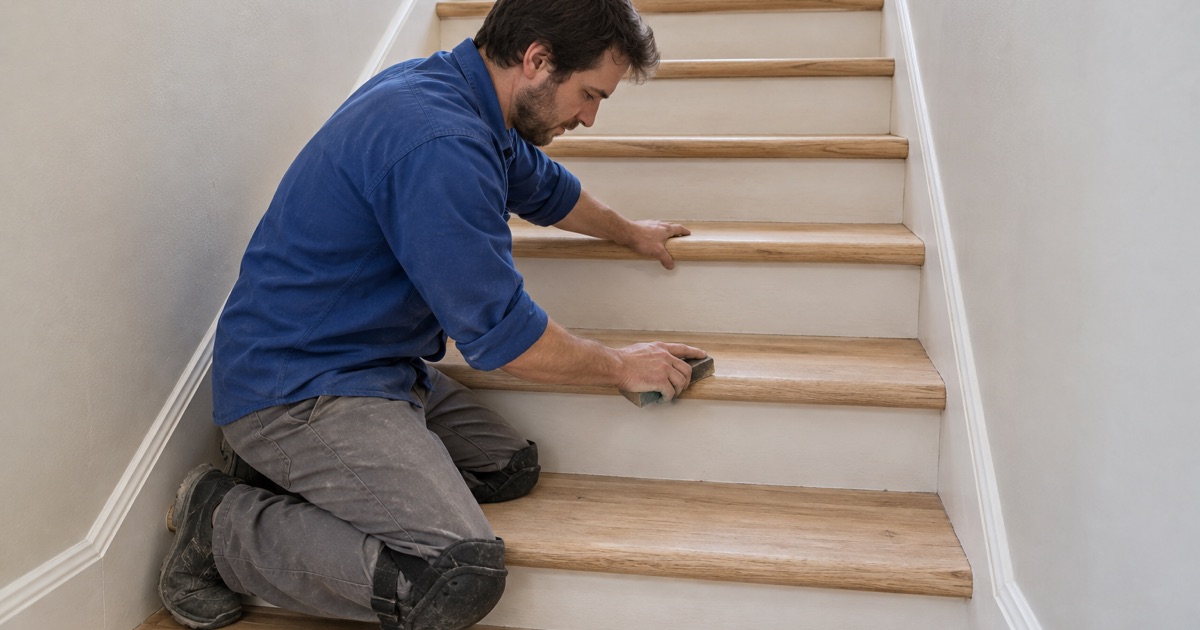
Hand Sanding Treads and Nosing
Each tread is sanded with small, dust-collecting sanders and hand tools, working into the corners where the tread meets the skirt board and the risers. The rounded nosing is shaped by hand so its profile stays crisp. This is slow work, and it is the difference between a stair that looks refinished and one that looks painted over.
Stain and Finish on Stairs
Stairs see concentrated traffic on the center of each tread, so the finish matters. We usually apply a durable waterborne polyurethane in a satin or matte sheen, which hides wear and reduces slipperiness compared with gloss. When the stair meets a refinished floor, we use the same stain and finish so the two read as one.
Worn and Damaged Treads
Treads with deep wear, splits or loose nosings are refastened or replaced. Old treads in older houses may have been sanded more than once, so we check the thickness first. A replacement tread is cut to match the species and nosing profile of the stair.
Painted and Older Stairs
Stripping Painted Treads
Painted stairs are common in older homes, especially back and attic stairs. Under the paint, there is often oak or pine worth saving. We strip the treads carefully with chemical strippers or scraping instead of grinding, then sand and finish them. Painted risers can be kept painted for contrast if you like that look.
Lead-Safe Stair Work
In homes built before 1978, paint on stairs, risers and balusters may contain lead. Massachusetts runs its own lead-safe renovation rules, so we check the build year and the paint before disturbing it. Work areas are contained, dust is controlled with HEPA vacuums, and paint is never dry sanded open on a stair used by the household.
Stairs in Two-Families
A shared front or back stair in a two-family serves both households. We plan the work in stages so each unit keeps a way in and out, seal off the rest of the house from dust, and schedule loud work at agreed times.
Converting Carpeted Stairs to Wood
Removing Carpet and Tack Strip
We remove the carpet, pad, staples and tack strip, then look at what is underneath. Finished hardwood treads that were carpeted over can often be refinished. Rough treads meant only for carpet need new hardwood treads and risers.
New Treads, Risers and Nosing
New treads are cut to fit each step, which in older houses is rarely identical from one step to the next. Risers are installed in wood or painted material, and nosing is matched to the landing and the floor at the top and bottom of the stair.
Keeping Rise Heights Even
Adding a new tread over an old one changes the height of the first and last steps. Uneven rise heights are a real tripping hazard, so we plan tread thickness and the landing transitions so each step stays consistent with the others.
Stair Parts and Details
Skirt Boards and Stringers
The skirt boards along the sides of the stair take dings and scuffs from vacuums and feet. We clean up and refinish or repaint them to go with the new treads, so the stair reads as a finished whole.
Landings and Transitions
Landings are often part of both the floor and the stair. We refinish them with the stair and plan clean transitions where they meet the hallway floor, using matching nosing or a threshold where heights differ.
Squeaky Stairs
Squeaks on stairs usually come from treads that have loosened from the stringers or risers. We refasten them from above or below and add glue blocks underneath where the stair is accessible from a closet or basement.
Planning and Pricing a Stair Job
What a Per-Tread Quote Includes
Our stair quotes list the number of treads, risers and landings, and what each gets: refinishing, stripping, repair or replacement. Nosing returns on open stairs, winder steps at a turn and landings are called out separately, because they take more time than a plain straight step. You see the stair cost on its own line, apart from the floors.
That separation helps when you are deciding what to do now and what can wait. Some customers refinish the floors this year and the stairs next; a clear per-step price makes that an easy call.
Scheduling Around a Stair You Use Every Day
Most houses have one main stair, and nobody wants to be stranded upstairs. We work in sections, finishing alternate steps first, so the stair stays passable with care. Coats are timed so the last one goes on when the household can stay off the stair for the evening.
Stairs Before a Sale or Turnover
The front stair is one of the first things a buyer or a new tenant sees. Worn treads and scuffed risers make a house look tired even when the floors are done. Refinishing the stair at the same time as the floors, or on its own before a listing or a vacancy, pulls the whole entry together.
- 20+ Years on Wood Floors
- Free Written Estimates
- Stairs Priced Per Tread