
Malden Wood Flooring handles pine floor refinishing in Malden, MA and around surrounding cities including Everett, Melrose, Chelsea, Medford and Somerville. Over our 20+ years, some of the most rewarding floors we have brought back are old pine: boards that have been painted, carpeted or patched for decades and still have plenty of life left when they are handled carefully.
Pine is not oak, and it should not be refinished like oak. It is softer, sands away faster and takes stain unevenly. Old pine in particular may already have been sanded, and face nails often sit close to the surface. We check the board count and thickness before sanding, because once too much is removed from an old board it cannot be put back.
The goal is a pine floor that looks cared for without losing what makes it pine: the warm color, the knots, and the marks of age that no new floor has.
Old Pine Floors in Older Houses
Eastern White Pine and Old-Growth Boards
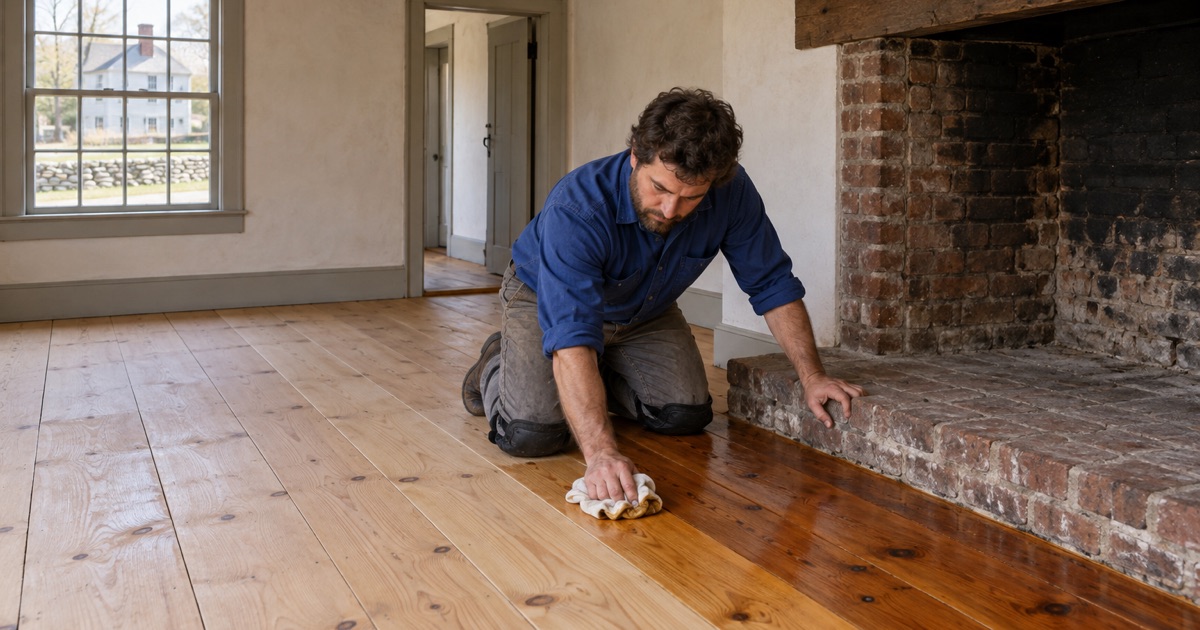
Many older New England houses have eastern white pine or other softwood floors, sometimes old-growth pine with tight grain and deep color that new lumber rarely matches. These boards were often wider and thinner than modern flooring. Some were face nailed directly to joists without a subfloor.
Pine Under Carpet and Paint
Pine floors were frequently covered with carpet, linoleum or paint when they went out of fashion. We remove the covering, pull every staple and tack strip, and scrape adhesive before sanding. Painted pine in homes built before 1978 is checked for lead first, because Massachusetts has its own lead-safe renovation rules for older homes.
Checking Thickness and Board Count
Before sanding, we look at the edges of boards at vents, thresholds or stair openings to see how much wood is left, and count boards in areas that were patched before. Old pine that has already been sanded several times may only have enough left for a light sanding, and we tell you that before starting.
Sanding Pine the Right Way
Setting Face Nails First
Old pine is often face nailed with cut nails through the top of the board. Nail heads work up over time. We set them below the surface before sanding, and replace any that have lost their grip, so they do not tear the sandpaper or gouge the floor.
A Gentler Grit Sequence
Pine sands quickly, so an aggressive pass can dish out the soft grain between harder growth rings. We start at the least aggressive grit that removes the finish, then work through finer grits, with careful edging along the walls. The aim is a smooth floor without flattening the character out of it.
Keeping Some of the Patina
Some customers want old pine sanded perfectly clean; others want to keep a little of the wear and color. We talk through that before sanding, because deep dents and old marks often remain in pine even after a full sanding, and trying to remove them all costs wood the floor cannot spare.
Color, Stain and Finish on Pine
Why Pine Blotches
Pine absorbs stain unevenly because density varies from one part of a board to the next. Dark stains make that worse. We prefer clear finishes on pine or light, warm tones, and test stain samples on your actual floor with a conditioner or water popping where color is wanted.
Waterborne, Oil-Modified or Hardwax Oil
Waterborne polyurethane keeps pine closer to its natural pale color. Oil-modified polyurethane gives an amber glow that deepens over time. Hardwax oil soaks in with a soft sheen and is easy to spot repair. Every finish we use fits the Massachusetts VOC limits for wood coatings.
Old Shellac Finishes
Some very old pine floors were finished with shellac, which softens with alcohol and water. We identify the existing finish before deciding whether a full sanding or a gentler approach is right, since shellac behaves differently from polyurethane.
Repairs Before Refinishing Pine
Radiator Holes and Patches
Where radiators and pipes came out, pine floors are often left with holes and cut boards. We patch them with matching pine woven into the floor rather than filler, then sand and finish the patch with the room.
Gaps and Loose Boards
Old pine floors often have wide gaps between boards. Seasonal gaps are normal and rigid filler usually fails. We refasten loose boards and, where you want gaps closed, fit thin wood slivers glued to one side of the gap so the boards can still move.
Beetles and Damaged Boards
Small round holes and fine powder can signal powderpost beetles in old pine. We check whether the activity is current before replacing damaged boards, and recommend treatment first where it is.
Living With a Refinished Pine Floor
Dents, Wear and Expectations
A refinished pine floor will pick up dents from dropped pans, chair legs and pet claws faster than oak will. That is the nature of softwood, and many owners of old houses consider it part of the appeal. A satin or matte sheen hides those marks much better than gloss, and rugs in the heaviest paths help.
Recoating Instead of Resanding
Because old pine has limited wood to spare, the best way to make a refinish last is to screen and recoat it before the finish wears through. A fresh coat every few years in busy rooms protects the wood and puts off the next full sanding for a long time.
We can set a rough schedule with you based on how the rooms are used, so the recoat happens while it is still an option rather than after bare wood shows.
Seasonal Gaps in Pine
Pine, especially wide old boards, opens up in winter when the heat dries the house and closes again in summer. Keeping indoor humidity steady narrows the swing. Those seasonal gaps are normal and are not a sign that the refinish failed.
- 20+ Years on Wood Floors
- Free Written Estimates
- Stairs Priced Per Tread